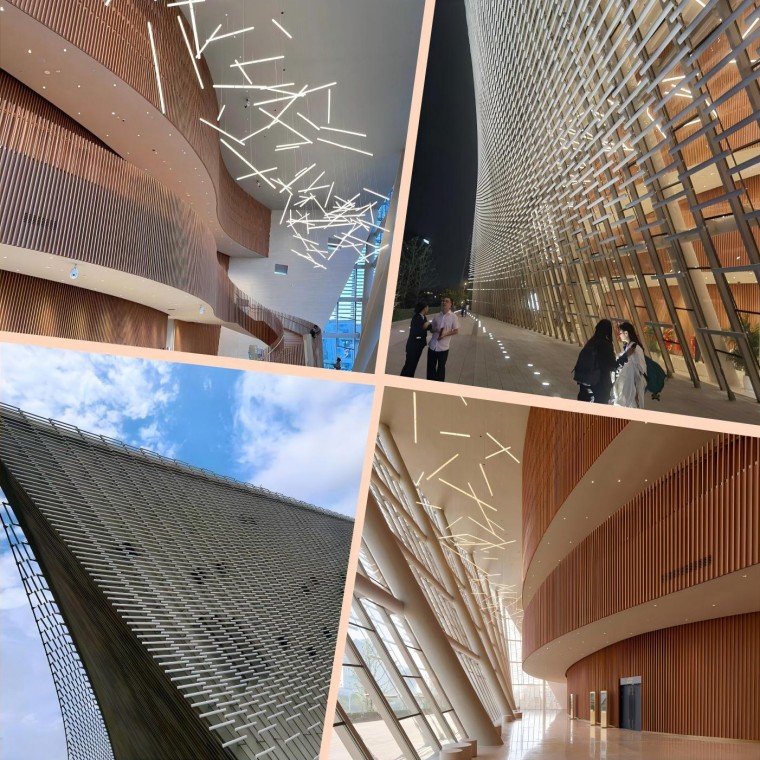
A double-curved facade is always more than an exterior surface. It is a negotiation between geometry, structure, material tolerance, installation logic and architectural emotion. In the case of Nanchang Poly Grand Theatre, the building’s white ceramic fin facade shows how a complex theatre volume can be wrapped with a light, rhythmic and culturally meaningful skin. The result is not a simple cladding system, but a layered architectural screen that gives the theatre its public identity.
This article is published by Terracotta Panel as an architectural case study and material application reference. The Nanchang Poly Grand Theatre ceramic facade shown here was not supplied by LOPO Terracotta. It is discussed as a professional reference for architects, facade consultants and project developers interested in double-curved facade design, architectural ceramic fins and linear terracotta screen systems.
The Challenge of Making a Large Theatre Feel Light
Theatre architecture often begins with a difficult physical reality. Performance halls require large enclosed spaces, controlled acoustics, backstage areas, technical rooms and strong structural volumes. These requirements can easily produce a heavy building. The task of the facade is therefore not only to cover the structure, but also to soften the mass and create a public face that feels approachable.
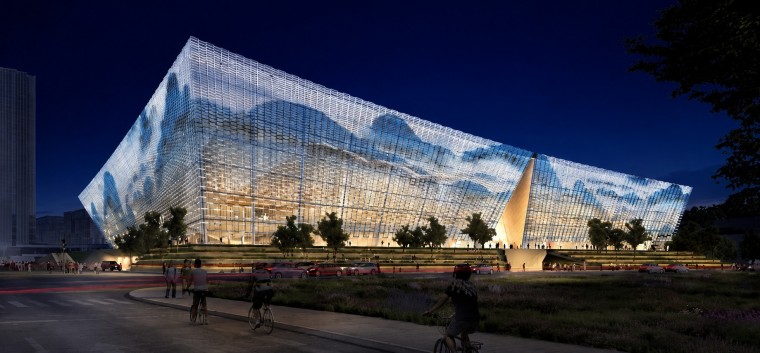
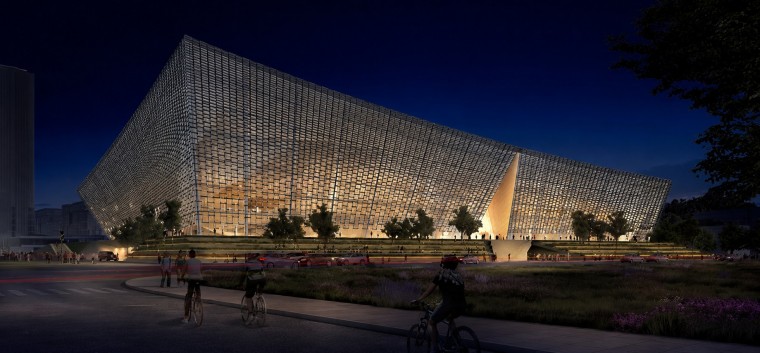
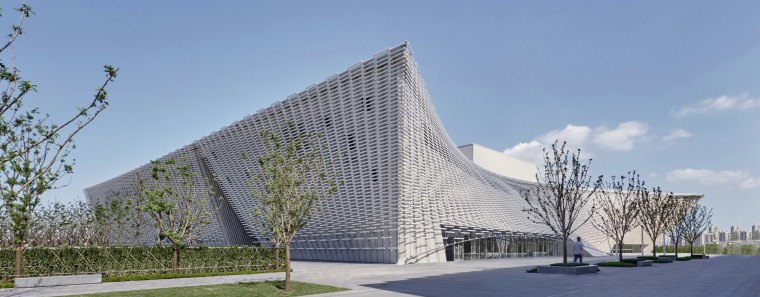
Nanchang Poly Grand Theatre addresses this challenge through a white ceramic screen that wraps the building like a second layer. The architectural ceramic fins are repeated across the exterior, but they do not form a flat box. Instead, they follow the changing geometry of the building and turn the volume into a softer, more fluid form. From certain angles, the facade looks almost like a woven textile. From other angles, it becomes a precise field of ceramic lines, shadows and openings.
This is one reason the project is valuable for facade design study. It shows that ceramic or terracotta elements can be used not only as wall decoration, but also as a tool to reshape the visual weight of a building. A large cultural venue can remain monumental without becoming visually closed.
Architectural Ceramic Fins as a Geometric System
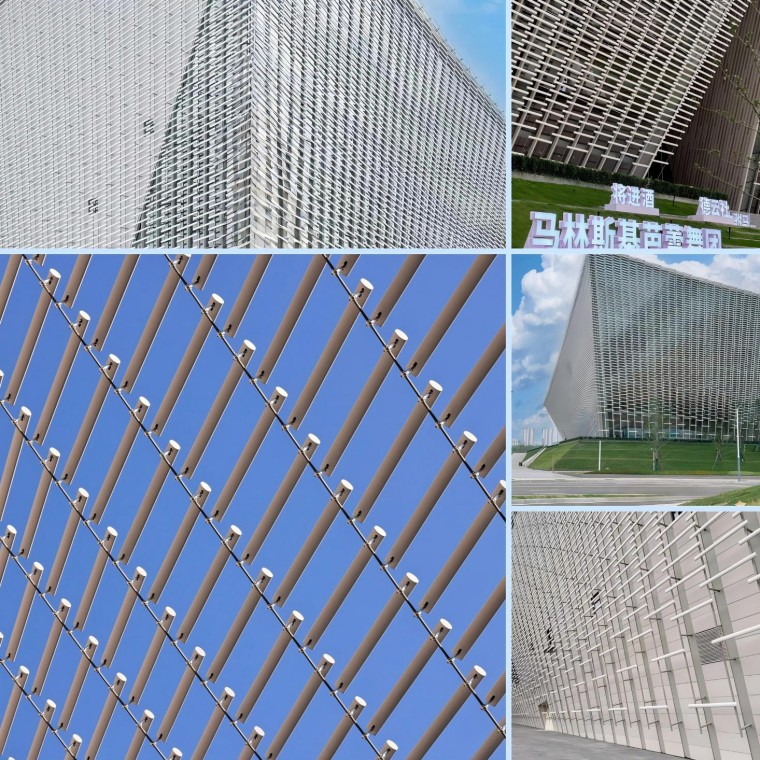
The ceramic elements on the theatre facade can be understood as architectural fins, ceramic louvres or linear screen components. Whatever name is used, their role is clear: they create depth, rhythm and controlled transparency. A single piece is simple, but thousands of pieces arranged across a curved facade create a much more complex architectural effect.
In double-curved facade design, repetition must be handled carefully. If every element is treated as an isolated part, the facade becomes difficult to build and control. If the system is over-simplified, the curve may lose its softness. The success of a project like Nanchang Poly Grand Theatre depends on finding a balance between standardization and visual fluidity. The ceramic fins need to repeat enough for production and installation, but the overall surface must still follow the architectural form.
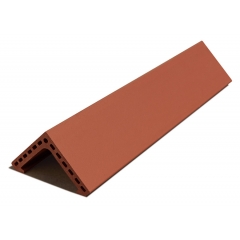
This principle is also relevant to Terracotta Baguette systems. Terracotta baguettes and ceramic fins are often used as linear facade elements for shading, screening, privacy control and decorative rhythm. Their final appearance depends heavily on spacing, angle, profile size, fixing position and the supporting substructure behind them.
Project Background: A Cultural Building in Nanchang
Nanchang Poly Grand Theatre, also known as Nanchang Grand Theatre, is located in Nanchang, Jiangxi Province, near the Jiulong Lake area. Public project information from PES-Architects describes the building as a cultural complex of about 45,000 square meters, including a 1,600-seat opera hall, a 450-seat multifunctional hall, art education spaces, rehearsal rooms, exhibition areas and commercial functions.
The project was designed by PES-Architects, with local cooperation from Chinese design partners. The theatre is not only a performance venue, but also a cultural destination for a new urban district. This makes the exterior especially important. The facade has to carry the image of the building before people enter the lobby or experience the performance hall.
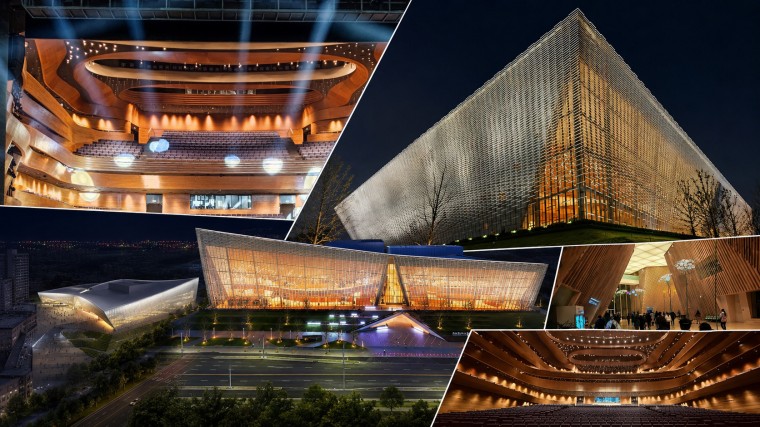
Instead of presenting the theatre as a closed object, the design uses a ceramic screen to filter the boundary between inside and outside. During the day, the building appears calm and white. At night, light from the interior passes through the screen and gives the theatre a lantern-like glow. The facade therefore works differently across time, weather and viewing distance.
Porcelain Inspiration Without Direct Imitation
One of the most interesting aspects of the project is the connection between the facade and local ceramic culture. Jiangxi has a deep relationship with Chinese porcelain history, and the theatre’s white ceramic screen is often described in relation to Linglong porcelain or translucent rice porcelain. The design does not copy a traditional porcelain pattern directly. Instead, it translates the feeling of delicacy, translucency and layered light into a contemporary facade system.
This approach gives the building a cultural root without making it look historical. The facade remains modern, clean and technically precise, but the material idea still belongs to its region. For cultural architecture, this is a strong strategy. A building can be contemporary and local at the same time when material selection is handled with care.
For architects working with Terracotta Facade Panels, this lesson is useful. Terracotta and ceramic materials naturally carry associations with clay, fire, craft and permanence. When used in a modern facade system, they can provide both performance and cultural expression.
How the Facade Creates Depth and Movement
A flat facade can be beautiful, but it rarely changes much as people move around it. A fin-based facade is different. Because the elements project outward and create gaps between them, the building changes continuously with the viewing angle. This is one of the strongest visual qualities of Nanchang Poly Grand Theatre.
When seen from the front, the ceramic fins can appear dense and protective. When seen from a sharper angle, the gaps become more visible and the facade begins to reveal the glass and interior light behind it. This shifting transparency gives the building a sense of movement. The theatre does not need complicated colors or excessive ornament; the depth of the facade itself creates the visual interest.
This effect is especially useful for buildings that are experienced in motion. A theatre beside roads, public plazas or open landscape areas is not viewed from only one fixed point. People approach it by car, bicycle and on foot. The facade must therefore work from multiple distances and angles. Linear ceramic fins are well suited to this condition because they create changing shadow and density without changing the basic material language.
Shading, Transparency and Environmental Comfort
Although the ceramic fin screen is visually striking, it also has practical value. A secondary facade layer can help filter sunlight, reduce glare and create a more comfortable edge condition around glazed areas. The exact performance depends on orientation, spacing, fin depth, profile shape and the complete wall build-up, but the general principle is clear: a screen facade can improve the relationship between light and interior space.
In a theatre, this control is particularly important. Public foyers and circulation areas often benefit from natural light, but direct glare and excessive heat can reduce comfort. A ceramic screen allows the building to receive light more softly. It also gives the public areas a sense of privacy without making them feel sealed from the city.
Terracotta and ceramic materials also have a strong advantage in long-term exterior use when the system is properly designed. Fired clay products have stable color, good weather resistance and a natural architectural texture. This is why ceramic fins, terracotta baguettes and related screen elements are often considered for museums, theatres, schools, office buildings and transport hubs.
From Product to System: Why Fixing Details Matter
For a project of this type, the visible ceramic element is only part of the story. Behind the facade, there must be a reliable support and fixing system. The design team needs to consider wind load, movement, tolerances, replacement access, drainage, installation sequence and the relationship between the ceramic screen and the main building envelope.
Double-curved facades make these questions even more important. A straight wall already requires careful alignment. A curved and inclined facade requires a higher level of coordination. The support structure must translate architectural geometry into buildable points. The ceramic fins must then be installed in a way that preserves the intended rhythm and surface quality.
For terracotta projects, early mock-up testing is strongly recommended. A small product sample can show color and surface texture, but it cannot show the real density of a facade screen. A larger mock-up helps confirm spacing, shadow effect, fixing visibility, color consistency and installation tolerance. It also gives the contractor a chance to review the construction method before mass installation.
Material Contrast Between Exterior and Interior
The exterior of Nanchang Poly Grand Theatre is cool, white and porcelain-like. Inside, the atmosphere becomes warmer, with bamboo and wood-toned surfaces creating a more intimate experience for visitors. This contrast works well for theatre architecture. The exterior establishes a clear civic image, while the interior supports comfort, gathering and performance.
Many cultural buildings need this balance. If the exterior is too warm and domestic, it may lose public strength. If the interior is too cold and abstract, visitors may feel distant from the building. Nanchang Poly Grand Theatre uses material contrast to solve this issue. The ceramic facade gives the city a bright landmark, while the warm interior finishes make the audience experience more human.
For terracotta facade design, similar contrasts can be developed in different ways. A project may use light-colored clay fins outside and natural wood inside. Another project may combine deep red terracotta panels with glass, metal or stone. The key is not to use materials randomly, but to let each material support a specific architectural role.
Lessons for Architects and Facade Consultants
Nanchang Poly Grand Theatre offers several practical lessons for double-curved facade projects. First, the facade concept should be connected to the building’s cultural purpose. Here, the ceramic screen is not only beautiful; it also refers to regional porcelain culture. Second, the geometry and the product system must be developed together. Curved surfaces, repeated fins and support structures cannot be treated separately.
Third, the facade should be tested under different lighting conditions. A white ceramic element may look very different in direct sunlight, cloudy weather, evening light and warm interior lighting. The night effect is especially important for theatres and cultural buildings because they are often most active after dark.
Fourth, the product must be considered as part of a full facade system. Ceramic fins, terracotta baguettes and panels all need correct fixing, packaging, transport protection and installation planning. The better these details are coordinated, the closer the final building will be to the architectural vision.
How LOPO Terracotta Relates to This Type of Facade Design
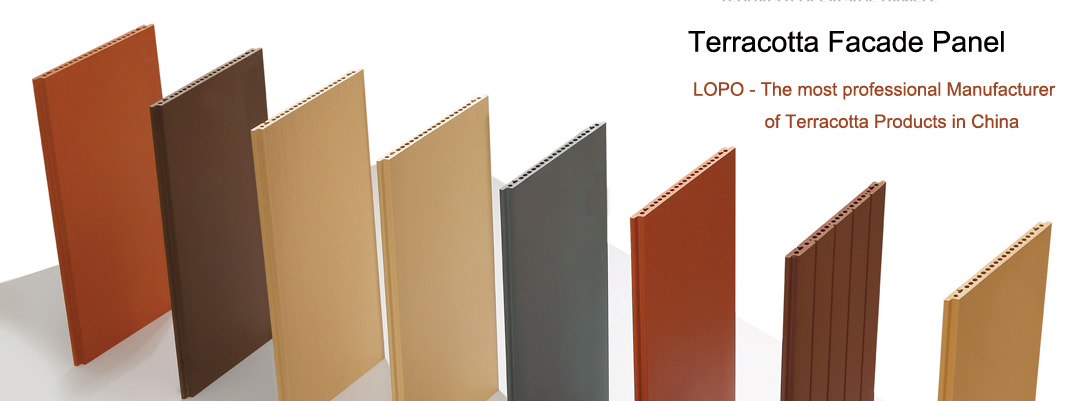
LOPO Terracotta is a China manufacturer of architectural terracotta products, including terracotta facade panels, terracotta baguettes, wall tiles, bricks and customized clay facade elements. Although the Nanchang Poly Grand Theatre ceramic fin facade was not supplied by LOPO Terracotta, the project is a valuable reference for the design possibilities of linear ceramic and terracotta components.
For projects that need a screen facade, LOPO can discuss possible terracotta profile sections, colors, finishes and production feasibility. Linear terracotta elements can be used for shading, visual screening, facade rhythm, privacy control and decorative expression. Depending on the design intent, they can be combined with glass, metal frames, solid walls or Terracotta Facade Panels.
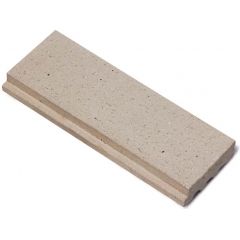
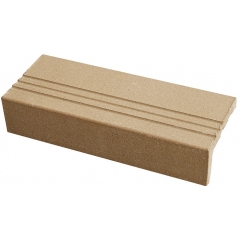
For simpler wall areas, Terracotta Tile or flat panel systems may be more suitable. For open screen zones, terracotta baguettes or special louver profiles can add depth and permeability. A good facade often combines several material strategies rather than relying on one surface treatment everywhere.
A Contemporary Facade Built from Repetition and Light
The beauty of Nanchang Poly Grand Theatre lies in its control. It does not depend on loud colors or complicated ornament. Instead, it uses repetition, curvature, ceramic texture and light to create a memorable building image. The facade feels quiet in the daytime and dramatic at night, which is exactly the kind of dual character a theatre can benefit from.
For architects studying double-curved facade design, the project shows that ceramic fins can do more than decorate a wall. They can shape the reading of the whole building. They can reduce mass, create shade, suggest local culture and turn the facade into a living surface. This is why linear ceramic and terracotta systems continue to have strong potential in contemporary architecture.
To explore related product possibilities, visit Terracotta Baguette for linear screen applications, or learn more about Terracotta Facade Panels for ventilated wall cladding systems. Nanchang Poly Grand Theatre is not our supplied project, but it remains a useful reference for understanding how ceramic and terracotta elements can support ambitious facade design.
Project References
Further project information can be found from the PES-Architects project profile, the PES-Architects opening news, the ArchDaily project publication, and the Nanchang local government report.
Editor’s note: This article is written as an architectural reference and material application study. The Nanchang Poly Grand Theatre ceramic fin facade shown here was not supplied by LOPO Terracotta.
Tags: double-curved facade design, architectural ceramic fins, ceramic facade screen