




Choosing wall decoration materials for public buildings is never only a matter of appearance. Public architecture needs durability, identity, visual comfort and a clear relationship with its surroundings. A good facade material should support the building’s function, but it should also help people understand what the building represents.
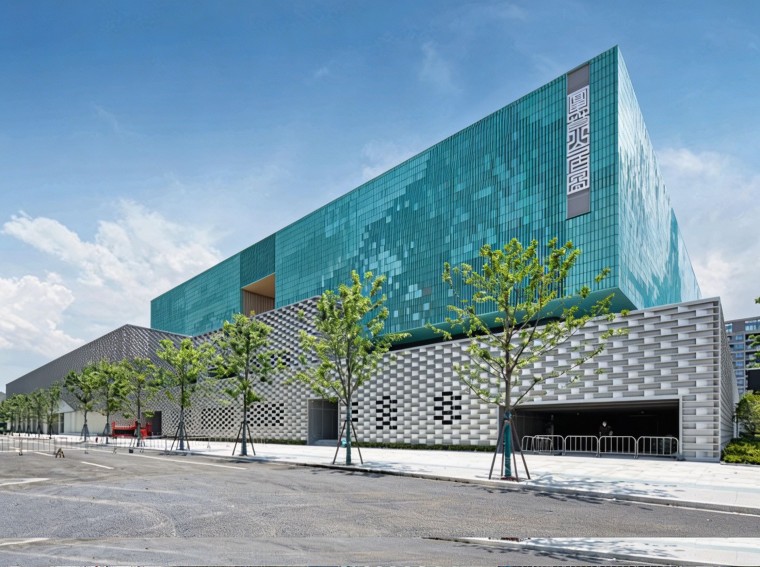
The Asian Games Village International Zone in Hangzhou provides a valuable reference for this topic. As an important public activity area of the Asian Games Village, the project uses green clay baguettes as a major exterior wall material, creating a facade that is modern, cultural and highly recognizable.
Rather than treating the exterior wall as a flat surface, the project turns it into a layered architectural screen. The ceramic lines, green glazed finish and abstract landscape pattern work together to form a building skin that reflects both the spirit of the Asian Games and the cultural background of Hangzhou.
Why Public Buildings Need Better Wall Decoration Materials
Public buildings are viewed by many people every day. They are seen from roads, plazas, parks, nearby residential towers and open public spaces. Their facades influence the visual quality of the city. For this reason, wall decoration materials used in public architecture should be selected with more care than ordinary exterior finishes.
A simple painted wall may be economical, but it often lacks depth and long-term visual character. A glass curtain wall may look clean and modern, but it can feel too common in many urban districts. Metal cladding can be precise and lightweight, but it may not always offer warmth or cultural expression.
Clay-based architectural materials offer another possibility. Fired ceramic elements have a natural sense of craft, while modern production makes them suitable for precise facade systems. When shaped into linear elements such as clay baguettes, ceramic rods or terracotta louvers, they can create more depth and movement than a flat wall surface.
This is exactly why the Asian Games Village International Zone is worth studying. Its facade is not simply covered with a decorative material. The wall material itself becomes part of the architectural story.
The Project Context: A Public Activity Area in the Asian Games Village
The International Zone is located between the athletes’ village, technical officials’ village and media village. It serves as one of the most important public activity areas within the Asian Games Village and also as a key place for presenting the image of Hangzhou to the outside world.
Such a building needs a facade that can work on several levels. It must look clear and organized from a distance. It should offer a pleasant experience for pedestrians. It also needs to carry a sense of local identity, because the Asian Games were not only a sporting event, but also a stage for cultural exchange.
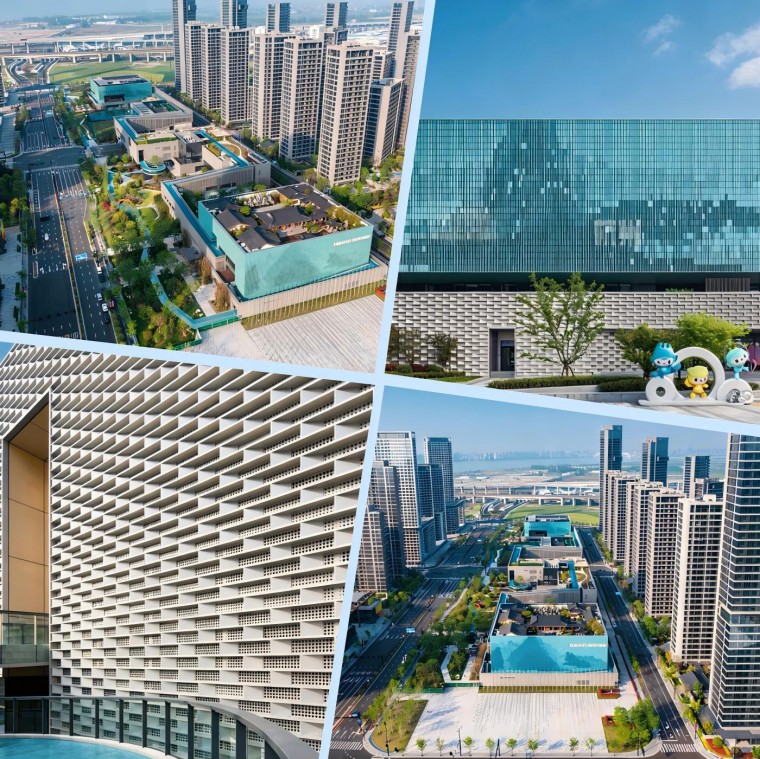
The designers answered this challenge through a carefully developed exterior wall system. Green clay baguettes were used to create a calm architectural image inspired by landscape painting, while a white metal brick base gave the lower facade a stronger urban and structural feeling.
This material combination helps the building avoid the monotony that can appear in large public projects. The upper facade feels poetic and open. The lower wall feels grounded and ordered. Together, they create a balanced public building elevation.
Clay Baguettes as Exterior Wall Decoration
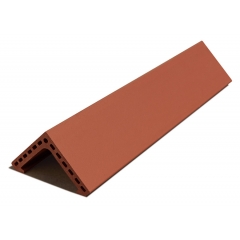
Clay baguettes are linear ceramic elements used on building facades. Depending on the market and project type, they may also be called terracotta baguettes, ceramic rods, terracotta rods, clay louvers, terracotta fins or architectural ceramic profiles.
As wall decoration materials, clay baguettes offer several advantages. First, they create shadow. A flat cladding material mainly depends on color and surface finish, but a baguette facade has depth. The gaps between the elements allow light and shadow to change throughout the day.
Second, they bring rhythm to large walls. Public buildings often have wide elevations, and a continuous flat surface can look heavy or empty. Linear ceramic elements divide the facade visually, making the building feel more refined and human-scaled.
Third, clay baguettes can carry color in a more natural and lasting way. When glazed, they can produce richer tones than ordinary painted surfaces. The glaze can give the facade a softer surface quality, especially when the design aims to express elegance rather than strong visual impact.
In the Asian Games Village project, the green clay baguettes do all these things at the same time. They decorate the wall, shape the building image, and help express the cultural concept behind the architecture.
From Wall Surface to Landscape Image
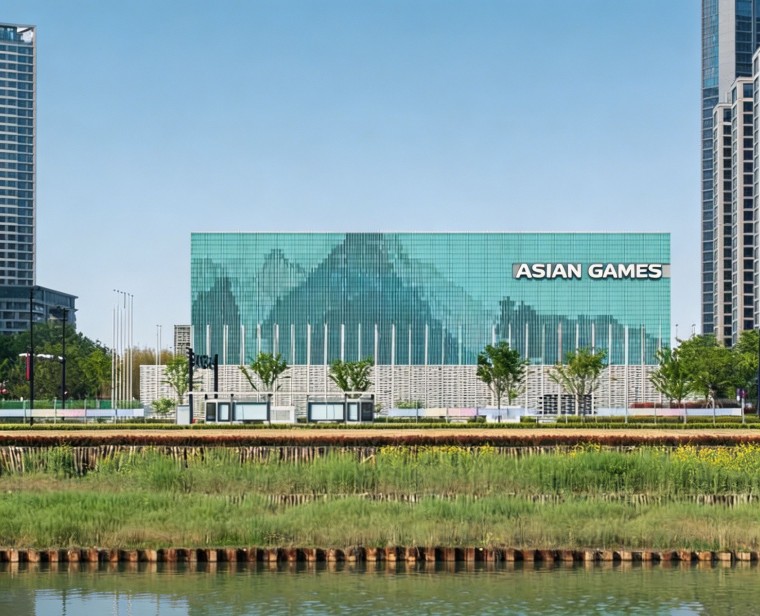
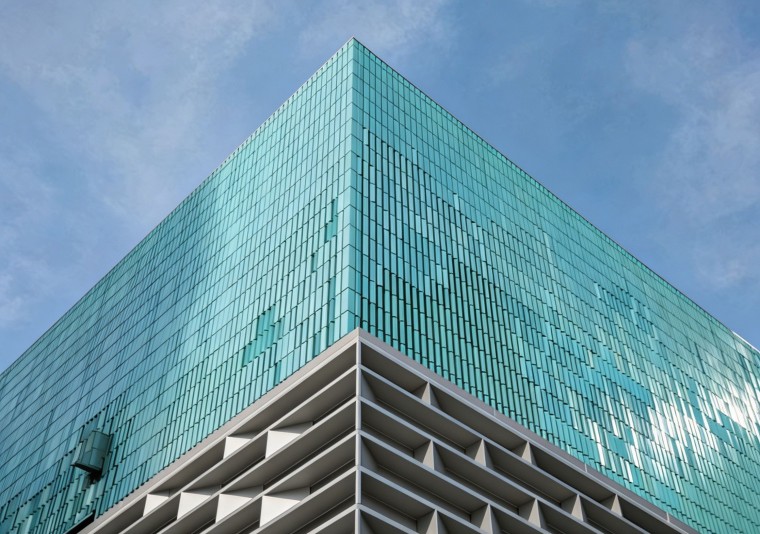
The most memorable feature of the project is the mountain-like image on the facade. The building takes inspiration from Dwelling in the Fuchun Mountains, a famous Chinese landscape painting associated with the cultural memory of Zhejiang. Instead of applying a printed graphic or flat mural, the designers used the wall decoration material itself to build the image.
This approach makes the facade more architectural. The landscape is not pasted onto the wall. It is formed through the arrangement, color and depth of the ceramic elements. When seen from far away, the green facade reads as an abstract mountain scroll. When seen closer, the viewer can recognize the individual clay baguettes and the precision behind the system.
This dual effect is very important for public buildings. A facade should be understandable from the city scale, but it should also have detail at street level. The Asian Games Village International Zone achieves this by using a repeated material unit to create a larger visual composition.
For designers, this is a useful lesson. Exterior wall decoration does not have to rely on superficial patterns. With the right material and arrangement, the facade system itself can become the pattern.
Color and Texture: The Value of a Green Glazed Finish
Color is often the first thing people notice on a building. In this project, the green tone is not an isolated design choice. It is connected with Hangzhou’s cultural references, especially celadon and Liangzhu jade. These references give the facade a softer and more meaningful character.
The glazed surface is also important. A glazed clay baguette can feel different from a painted metal strip or a coated panel. It has a fired ceramic quality, with depth and slight variation. Under sunlight, the surface can appear brighter and more reflective. In softer weather, it can look quieter and more restrained.
This changing surface quality supports the landscape concept. Mountains in traditional Chinese painting are not hard-edged objects. They are layered, atmospheric and often partly hidden. The green glazed wall surface creates a similar feeling in architectural form.
For public architecture, this kind of material softness can be very valuable. It helps a large building feel less cold, especially when surrounded by glass towers and hard urban surfaces.
White Metal Brick and the Wall Base
The project also uses white metal brick on the lower part of the building. This material choice comes from the idea of a traditional city wall. The metal brick modules reinterpret masonry in a modern way, creating a base that feels strong and ordered.
This lower wall plays an important supporting role. It gives the building a sense of foundation and helps balance the lighter green facade above. The white color also creates a clean contrast with the green glazed ceramic surface.
For public building wall design, the combination is effective because each material has a clear function. The clay baguettes create the cultural landscape image. The white metal brick base gives the facade structure and urban presence.
This is a practical reminder for facade design. A project does not need one material to solve every problem. Better results often come from a clear division of roles between materials.
Detail Makes the Facade More Convincing
A wall decoration material can only perform well when the details are carefully handled. In the Asian Games Village project, the ceramic elements were not used as simple repeated strips. According to the project introduction, the clay baguette elements were produced in four different sizes and treated carefully at corners, allowing the facade to extend for nearly 600 meters.
This point deserves attention. Large public building facades often fail at transitions: corners, openings, entrances, roof edges and connections with other materials. If these details are not well resolved, even a beautiful material can look unfinished.
The use of different sizes helps the facade create a more natural rhythm. The corner treatment helps the material language continue around the building. The long facade extension gives the project the feeling of a continuous scroll, rather than separate decorative elevations.
For architects and contractors, this means clay baguette systems should be planned early. Section size, fixing method, corner module, color control, tolerance and installation sequence all influence the final result.
What This Case Means for Future Public Architecture
The Asian Games Village International Zone shows that wall decoration materials can contribute to public architecture in several ways.
They can create identity. The green clay baguette facade gives the building a memorable image within a modern urban district.
They can express culture. The reference to landscape painting, celadon and jade connects the building with Hangzhou’s local character.
They can improve scale. The linear ceramic elements break down a large facade into a more comfortable visual rhythm.
They can support long-term use. Because the design is rooted in cultural meaning rather than temporary event graphics, the facade can remain relevant after the Asian Games.
These qualities are valuable for many types of public projects, including cultural centers, schools, sports venues, transport hubs, civic buildings, hotels and commercial complexes.
Clay Baguettes and Similar Architectural Terracotta Products
In international construction and facade markets, the terminology for this product family can vary. “Clay baguette” is one useful description because it emphasizes the linear fired-clay form. “Terracotta baguette” is more commonly used by many manufacturers. “Ceramic rod” and “terracotta rod” are also easy to understand for designers and contractors.
These products can be used vertically or horizontally. They may function as wall decoration, sunscreens, ventilation screens, balcony screens, ceiling features or facade shading elements. Their visual effect depends on profile size, spacing, color, surface finish and support system.
Compared with many flat exterior wall materials, clay baguettes offer a stronger sense of depth. They also provide more design flexibility than ordinary brickwork because they can be arranged in different patterns and connected to modern facade support systems.
For projects seeking a natural but contemporary facade material, this product family is a strong option. It combines the warmth of ceramic material with the precision required for modern architecture.
Industry Reference and LOPO Terracotta
This article is written as an industry case study for architectural material inspiration. The clay baguettes and related ceramic elements used in the Asian Games Village International Zone were not supplied by LOPO Terracotta. However, the project offers a meaningful reference for designers and facade contractors interested in similar wall decoration materials for public buildings.
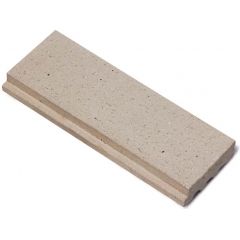
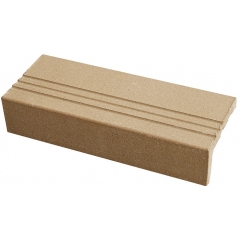
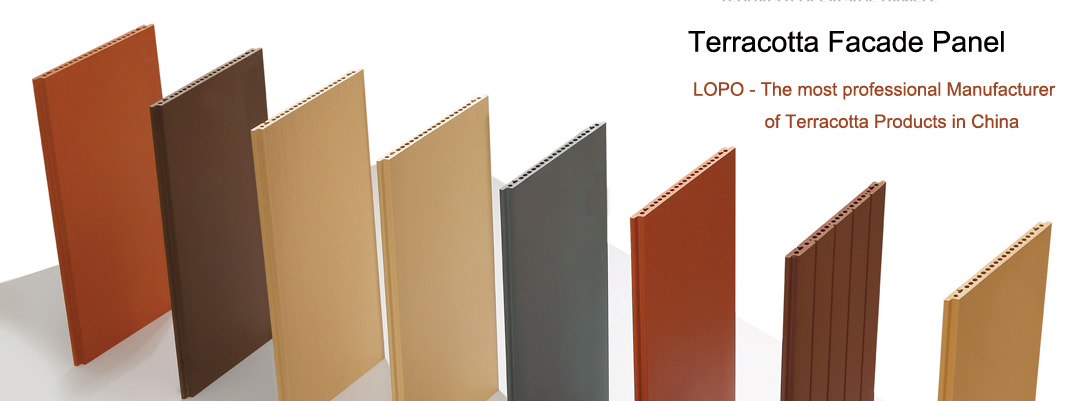
LOPO Terracotta Panel is a China-based manufacturer of architectural terracotta products, including terracotta facade panels, terracotta bricks, terracotta baguettes, terracotta louvers and customized ceramic profiles for exterior wall cladding and rainscreen facade systems.
For linear ceramic wall decoration, LOPO provides Terracotta Baguette products that can be used as clay baguettes, ceramic rods, terracotta fins, sunshade elements and decorative facade screens. Different shapes, sizes, colors and installation arrangements can be considered according to the architectural concept.
More information about the Hangzhou Asian Games Village International Zone project and its green landscape-inspired facade can be found in the project introduction.
Conclusion: Wall Decoration with Architectural Meaning
The Asian Games Village International Zone demonstrates that wall decoration materials can do much more than improve the appearance of a building. When carefully selected and detailed, they can shape public identity, express local culture and create a richer urban experience.
The green clay baguette facade is successful because it works at different levels. It gives the building a clear image from a distance. It offers material depth at close range. It connects modern public architecture with the cultural memory of Hangzhou.
For future public building projects, clay baguettes and similar terracotta facade products provide a practical and expressive solution. They can help transform a large exterior wall into a textured, meaningful and lasting architectural surface.