




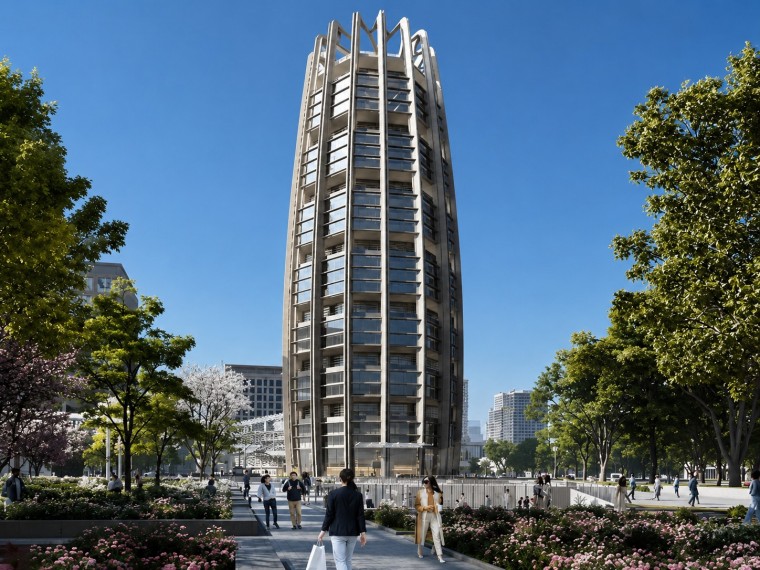
A modern headquarters building is no longer judged only by its height or its interior quality. The building envelope has become one of the most important parts of the project, because it affects energy use, daylight, comfort, identity and long-term maintenance. Sinochem Headquarters Tower in Xiong’an New Area is a useful example of this direction. Its facade combines a strong architectural image with low-carbon technologies, including folded glass, shading ceramic rods, photovoltaic materials and a distinctive crown structure.
This article looks at the project from the perspective of green building envelope design. It is shared as an industry reference, not as a supply case by LOPO Terracotta. The value of the project is that it shows how a facade can be more than a weather barrier. It can become an environmental filter, a visual identity system and a durable architectural surface.
Green Building Envelope Design Is More Than Energy Saving
When people talk about green buildings, they often think of solar panels, efficient air-conditioning systems or low-energy lighting. These are important, but the facade should not be overlooked. The building envelope is the first line of contact between indoor space and the outdoor climate. It controls heat, sunlight, wind, views and the public image of the building.
A well-designed envelope does several things at once. It reduces unnecessary solar heat gain. It allows comfortable daylight. It protects the main structure. It gives the building a clear identity. It also keeps its appearance stable over many years. For large office towers, these tasks are especially demanding because the facade area is huge and any design decision is repeated across thousands of square meters.
This is why clay sunscreen fins and ceramic shading elements deserve attention. They are not only decorative strips on a curtain wall. When planned properly, they can improve shading, add facade depth, reduce visual glare and bring a warmer material quality to large glass elevations.
A Xiong’an Landmark with a Low-Carbon Facade Strategy
Sinochem Headquarters Tower stands in the Start-up Area of Xiong’an New Area and has been widely described as a new landmark beside Baiyangdian. Public reports mention that the tower is about 150 meters high and uses a “golden reed” concept for its architectural form. This idea gives the building a regional image rather than a generic corporate tower appearance.
The reported curtain wall system is particularly interesting because it combines several layers of green design. Folded glass creates a dynamic surface. Shading ceramic rods help control sunlight and strengthen vertical rhythm. Photovoltaic panels are integrated into the facade and roof areas. Together, these elements suggest a building envelope that is designed for both performance and image.
For architects, this is a good reminder that sustainable facade design should not look forced. A low-carbon building does not need to appear like a machine. It can be elegant, warm and rooted in local imagery. The best green envelope is one where the technical strategy and the architectural expression support each other.
The Function of Clay Sunscreen Fins
Clay sunscreen fins can be used in front of glass, along curtain wall mullions or as part of an outer screen. Their main function is to reduce direct sunlight and soften glare, but their effect is also visual. They create shadow, rhythm and a more layered facade surface.
For office buildings, this is important because daylight must be controlled rather than simply maximized. Too much direct sun can make interior spaces uncomfortable. Too little daylight can make the workplace feel closed and artificial. A well-spaced ceramic fin system can help find a middle ground, allowing light to enter while reducing the harshness of exposed glass.
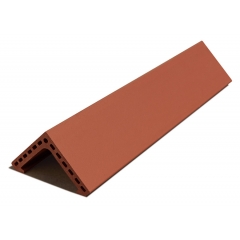
The profile of the fin also matters. A slim rectangular profile gives a neat and precise appearance. A rounded or oval profile feels softer. A deeper profile creates stronger shadow and a more protective facade. In some projects, custom profiles are developed to match the building concept. This flexibility is one of the advantages of extruded terracotta and ceramic facade products.
Why Terracotta Works Well with Glass and Photovoltaic Materials
Modern building envelopes often combine many materials. Glass provides transparency. Aluminum or steel provides structure and precision. Photovoltaic panels provide energy generation. Ceramic and terracotta elements provide texture, shading and long-term color stability. The challenge is making these materials feel like one design rather than a collection of separate products.
Terracotta works well in this mix because it has a natural tone that can soften more technical materials. Glass and metal can sometimes feel cold, especially on large towers. Clay-based ceramic elements bring a mineral quality that feels more grounded. This is useful for headquarters architecture, where the building should look modern but not distant.
Another advantage is durability. Terracotta is fired at high temperature, and its color is not simply a surface paint. Depending on the finish, the color can come from the clay body, engobe or glaze. This helps the facade keep a stable appearance under sun, rain and seasonal temperature changes. For large public-facing buildings, long-term appearance is part of the sustainability conversation.
From Facade Panels to Sunscreen Fins
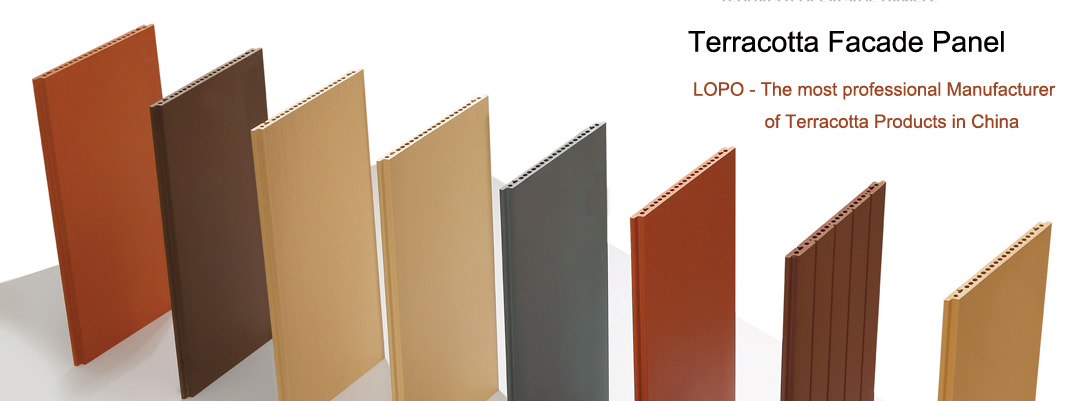
Terracotta is often associated with flat panels, and flat panel systems remain a major solution for exterior walls. However, the same material family can be used in many forms. A project may need solid cladding on one elevation, open fins on another, and smaller ceramic wall elements around entrances or interiors.
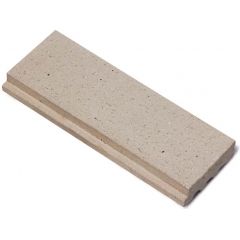
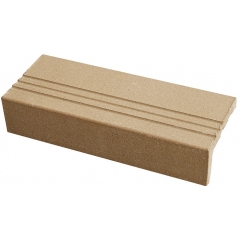
For example, Terracotta Facade Panels can create a clean and durable wall surface, while Terracotta Baguette systems can be used as screens, louvers or sunscreen fins. In areas where a finer wall finish is required, Terracotta Tile may help continue the ceramic material language at a smaller scale.
This product-family approach is helpful for complex projects. A headquarters tower may have a podium, lobby, office floors, crown, roof equipment areas and landscape walls. Each area has different needs, but the material tone can remain connected. That connection makes the whole project feel more coherent.
The “Golden Reed” Idea and Vertical Envelope Rhythm
The “golden reed” concept of Sinochem Headquarters Tower is a strong example of how a facade idea can come from landscape rather than pure geometry. Reeds are vertical, light and clustered. They move with the wind and reflect sunlight in warm tones. A tower cannot literally behave like reeds, but it can borrow their rhythm and color feeling.
Clay sunscreen fins are suitable for this kind of translation because they are naturally linear. Repeated across a facade, they suggest growth and vertical movement. Their shadows change during the day, so the building does not appear completely static. In warm beige, sand or golden-brown tones, ceramic fins can also echo the soft color range of natural reeds.
This kind of design thinking is more powerful than simply choosing an attractive material. The facade component becomes part of a story. The material supports the concept, and the concept gives the material a reason to exist.
Technical Coordination Behind a Clean Envelope
A clean facade is often the result of difficult coordination. Linear ceramic elements may look simple from a distance, but they require careful planning. The support system, brackets, anchors, joint alignment, installation tolerance and wind load calculation all affect the final result.
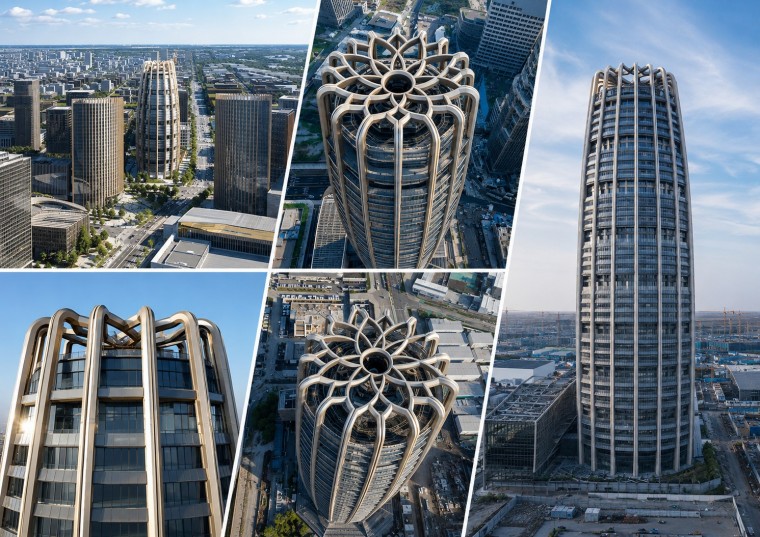
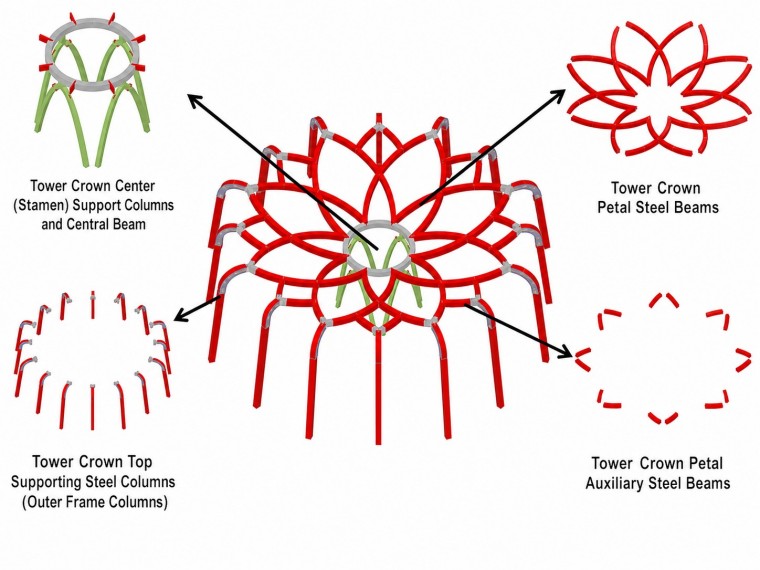
Public reports note that the tower has an octagonal form, inclined outer frame columns and a complex flower-like crown, with BIM and 3D modeling used to solve positioning and construction accuracy. This is relevant to many terracotta facade projects. When a building has special geometry, the facade supplier and contractor need to coordinate early to avoid conflicts between design intention and site reality.
For clay sunscreen fins, the fixing method is especially important. The ceramic profile must be supported safely, but the brackets should not dominate the appearance. The system should also allow for thermal movement, replacement and practical installation. A beautiful ceramic fin is only successful when the whole assembly is reliable.
Photovoltaics and Shading Should Work Together
Photovoltaic integration is becoming more common in large commercial buildings, but it should not be treated as a separate layer from the rest of the facade. The visual relationship between solar materials, glass, shading devices and solid cladding can decide whether the envelope looks refined or fragmented.
In the Sinochem Headquarters Tower case, public reports mention photovoltaic materials integrated into both facade and roof areas. This is a useful direction for future buildings. A tower envelope can generate energy, reduce heat gain and maintain a strong architectural image at the same time, but only if the different systems are coordinated carefully.
Clay sunscreen fins can support this coordination by giving the facade a repeated visual order. They can help organize the appearance of glass, opaque areas and technical components. In some projects, ceramic fins may also be used to screen service zones, roof equipment or less visually attractive parts of the envelope.
Night View and the Long-Term City Image
A green building envelope should not be evaluated only in daylight. Many headquarters buildings are seen most often in the early morning, evening and night. The facade must therefore have a second life after sunset. Lighting, shadows and reflections can either strengthen or weaken the daytime design.
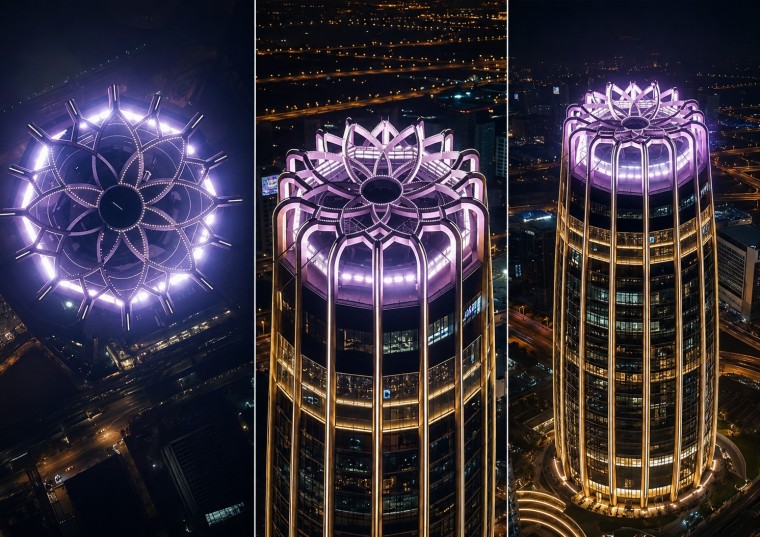
The night views of Sinochem Headquarters Tower show how the crown becomes a clear urban sign. The lighting emphasizes the flower-like form while the vertical facade rhythm remains visible. This is important because a landmark building needs a recognizable image at different times of day.
Terracotta and ceramic fins can work well with lighting because they create depth. Light can wash across the surface, graze the edges or glow from behind a screen. Warm light usually enhances the natural color of clay materials, while cooler light can make the building appear more technical. The lighting strategy should therefore be discussed together with the facade material selection.
Interior Surfaces and the Same Material Attitude
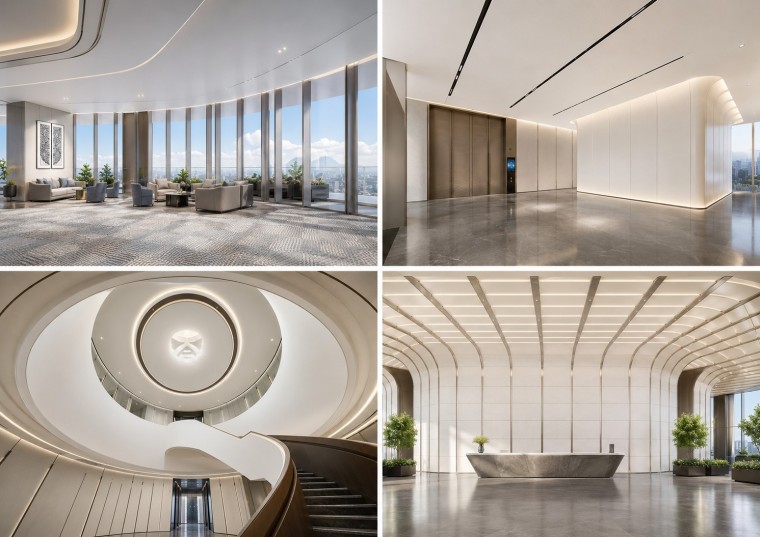
The interior images of the project show another side of headquarters architecture: calm wall surfaces, clean lines, soft lighting and large open spaces. Even though the interior is not the same as the exterior facade, the design attitude is related. Both rely on clarity, controlled detail and a restrained material palette.
This connection is useful for designers. A building envelope should not feel disconnected from the spaces inside. If the exterior uses warm ceramic tones and clean vertical lines, the interior can continue the same atmosphere through wall tiles, ceramic panels, stone-like surfaces or other refined materials. The goal is not to repeat one material everywhere, but to create a consistent experience.
For projects using terracotta, interior applications can sometimes support the same identity as the facade. Lobby walls, lift halls, reception areas and public corridors may use ceramic wall tiles or terracotta-inspired finishes to connect the outside and inside of the building.
Lessons for Architects and Developers
The Sinochem Headquarters Tower case offers several practical lessons for architects and developers considering terracotta or ceramic facade materials. First, the facade concept should be clear before choosing the product. A sunscreen fin, panel or tile should serve the overall building idea.
Second, shading should be integrated rather than attached. If fins are planned early, they can align with structural grids, curtain wall divisions and lighting design. If they are added late, they may create visual and technical conflicts.
Third, mock-ups are essential. Ceramic color, shadow depth and spacing are difficult to judge from drawings alone. A full-scale sample can help the project team confirm color, texture, fixing details and the relationship between the fins and glass.
Fourth, long-term maintenance should be part of the decision. A green building is not only green on the day it opens. It should remain durable, repairable and visually stable over time. Fired clay products are well suited to this thinking because they offer a natural surface with strong weather resistance.
TerracottaPanel.com and Ceramic Building Envelope Materials
Terracotta Panel provides architectural terracotta products for modern building envelopes, including facade panels, baguettes, wall tiles and brick-related products. For projects that require a solid exterior wall, Terracotta Facade Panels can offer a durable ceramic cladding solution with natural color and clean detailing.
For projects that need shading, screening or vertical rhythm, Terracotta Baguette products can be developed as clay sunscreen fins or linear ceramic elements. For interior or smaller-scale wall applications, Terracotta Tile products can help continue the ceramic material language inside the building.
Every project has different performance and design requirements. Some need strong shading. Some need a quiet solid wall. Some need a custom color that matches the surrounding urban context. Early communication with the project team can help define the right product, profile, surface finish and installation approach.
Conclusion
Sinochem Headquarters Tower shows how green building envelope design can bring together environmental performance and architectural identity. Its combination of glass, ceramic shading elements, photovoltaic materials and symbolic crown design makes it a meaningful reference for future headquarters buildings and landmark towers.
Clay sunscreen fins and terracotta facade products are valuable because they can work across several levels at the same time. They shade the facade, enrich the surface, warm the appearance of glass and support a long-lasting building image. As more projects look for sustainable materials with architectural character, terracotta will continue to be a practical and expressive choice for modern building envelopes.
To explore related ceramic facade materials, visit Terracotta Panel, learn more about Terracotta Facade Panels, or review Terracotta Baguette options for sunscreen fins, facade screens and linear architectural expression.
External references: Xiong’an Official Website and Science and Technology Daily.
Tags: clay sunscreen fins, ceramic sunscreen fins, terracotta facade panels, sustainable facade materials, headquarters building envelope